World Police Summit 2026 · Side Event
Forensic Science Forum
The fourth edition of the student forensic science competition, organised by Dubai Police – General Department of Forensic Science and Criminology. Selected students exhibit their projects on the summit floor.
Forum dates16–18 November 2026 · 3 days
Running alongsideWorld Police Summit 2026
Submissions closeFriday 23 October 202623:59 UAE time
Submit Your ProjectRegister as a Visitor
About the Forum
A student forensics competition on the summit floor
Taking place from 16–18 November 2026 alongside World Police Summit 2026, the Forum, organised by Dubai Police – General Department of Forensic Science and Criminology, gives university students the opportunity to take their projects beyond the classroom and into the professional world.
25 selected student projects will be showcased to forensic specialists, law enforcement professionals, entrepreneurs, academics and global leaders, providing students with valuable opportunities to:
- Showcase & gain recognition for their work
- Network with global experts and industry leaders
- Discover entrepreneurship and commercialisation opportunities
- Learn international best practices and emerging forensic trends
- Understand the real-world impact and ROI of their projects
- Build connections that can support their future careers and research
For universities, student selection provides institutional visibility, recognition of student excellence, research exposure, and opportunities to strengthen collaboration with forensic and law enforcement institutions.
Turn your academic project into an idea with real-world impact.
25
Student projects exhibited
04
Fourth edition
3
Days — 16 to 18 November 2026
Organised by


Who can enter
Eligibility criteria
Criteria for project submission and acceptance. All five apply to every entry.
01
Student level
Open to undergraduate and postgraduate students.
02
Academic background and project relevance
Participation is not restricted to a specific major or field of study. Submitted projects must address or incorporate relevant scientific and technological fields — such as Artificial Intelligence, Data Science, Healthcare, Engineering or Natural Sciences — and must demonstrate potential applicability, relevance or practical value within forensic science.
03
Institution
Open to students enrolled in UAE based universities and higher education institutions.
04
Team composition
Projects can be submitted by individual students or teams of 2 to 4 students. Both individual and team submissions are welcome.
05
University supervision and coordination
Each participating team or individual student should have a designated university supervisor or academic representative. The supervisor is the primary point of coordination with the university administration, and facilitates the necessary procedures — including official leave or attendance approval for the summit.
How it works
Three steps to the summit floor
01
Submit online
Upload your project through the submission form between 21 September and 23 October 2026. A project proposal may be submitted as a Word document.
02
Selection
Projects are reviewed against the selection criteria by a panel of Elite Forensic Scientists. 25 projects are selected and announced on 2 November 2026.
03
Exhibit at the Forum
Selected students exhibit their projects from 16 to 18 November 2026, across all three days of the summit. Presentation format, timings and judging details are sent directly to selected students.
Selection criteria
How projects are assessed
Submitted projects are judged against the following criteria. Not every criterion applies to every project, but the strongest submissions address as many as are relevant to their field.
01
Forensic relevance
The project should address a genuine need, challenge or gap within forensic science, crime scene investigation, laboratory analysis, evidence management or criminal investigation.
02
Scientific validity
The concept should be supported by sound scientific principles, appropriate methodology and credible experimental or technical evidence.
03
Accuracy and reliability
The proposed method or technology should demonstrate consistent performance, reproducibility and acceptable error rates for forensic use.
04
Evidence integrity
The project should minimise the risk of contamination, alteration, loss or destruction of evidence, and preserve evidential value throughout handling or analysis.
05
Chain of custody compatibility
The solution should support traceability, documentation, accountability and secure handling of forensic evidence.
06
Operational applicability
The project should be suitable for realistic forensic environments, including crime scenes, laboratories or investigative workflows.
07
Speed and efficiency
Consideration should be given to whether the project reduces examination time, processing time, manual workload or delays in obtaining forensic results.
08
Detection and analytical capability
The project should improve the ability to detect, identify, visualise, classify, quantify or interpret forensic evidence.
09
Validation potential
The method or technology should be capable of undergoing formal validation or verification before operational implementation.
10
Safety
The project should consider the safety of forensic personnel, evidence, the public and the environment, particularly where chemicals, biological materials, radiation or hazardous substances are involved.
11
Innovation and added value
The project should provide a meaningful improvement over existing forensic methods, rather than simply replicating an established technique.
12
Integration with existing systems
Consideration should be given to compatibility with current laboratory procedures, digital systems, databases, instruments and reporting workflows.
13
Data security and confidentiality
For digital or AI based projects, the project should address secure data storage, access control, privacy and protection of sensitive case information.
14
Human oversight
Where AI or automated decision making is involved, the project should maintain appropriate forensic expert review and avoid replacing professional interpretation without validation.
15
Scalability and implementation potential
The project should have realistic potential for deployment beyond a university prototype and, where appropriate, adoption by forensic laboratories or law enforcement agencies.
16
Cost effectiveness
The expected forensic benefit should be proportionate to the equipment, consumables, maintenance, training and implementation costs.
17
Readiness and maturity
Preference may be given to projects supported by a functioning prototype, experimental results, validation data, comparative testing or a clear implementation pathway.
What you gain
Recognition beyond the competition
Prizes
An iPhone and an iPad for the leading projects.
Participation certificates
Issued to selected students, with barcodes generated by the department and displayed at the summit.
Exhibit at the summit
The 25 selected projects are exhibited on the summit floor, in front of forensic practitioners, law enforcement leaders and academics.
Workshops with specialists
Specialised workshops delivered by professionals in the field, giving direct access to forensic specialists.
Key dates
Dates and deadlines
- Submissions open21 September 2026
- Submissions closeFriday 23 October 202623:59 UAE time
- Selected students announced2 November 2026
- Forensic Science Forum16–18 November 2026
- World Police Summit 202616–18 November 2026

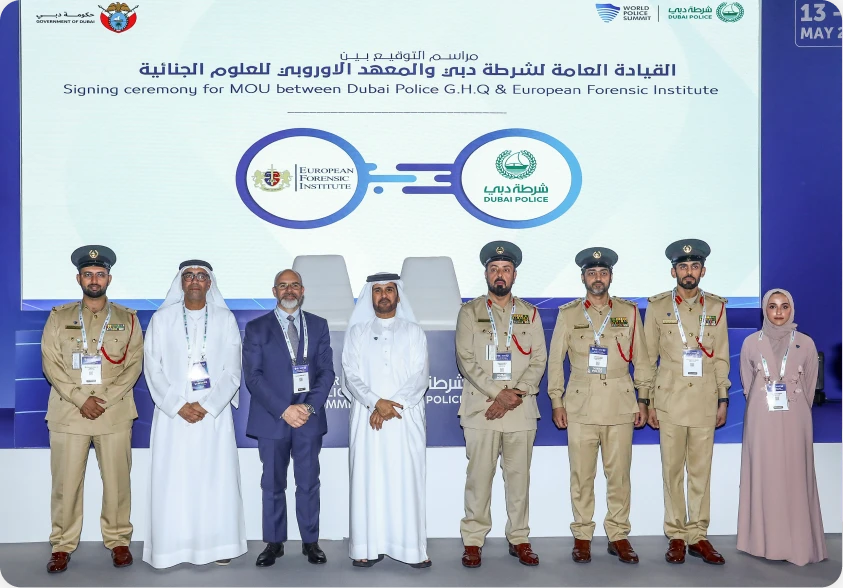

World Police Summit 2026 venue and stage imagery. Photography from previous Forum editions appears further down this page.
Ready to submit your project?
Applications must be submitted online by Friday 23 October 2026 at 23:59 UAE time.
Twenty five projects will be selected to exhibit at World Police Summit 2026 from 16 to 18 November.
Submit Your ProjectRegister as a Visitor
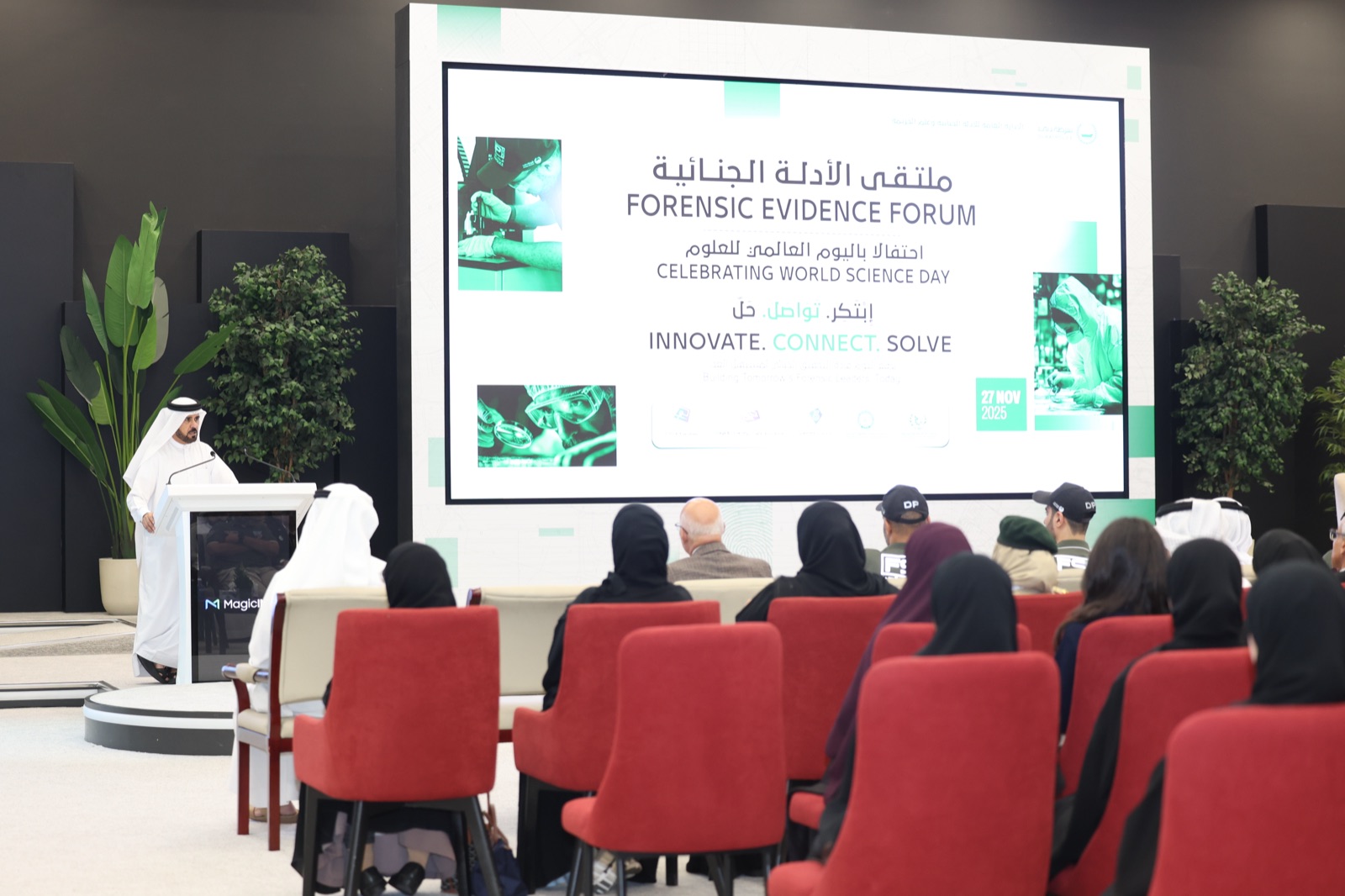
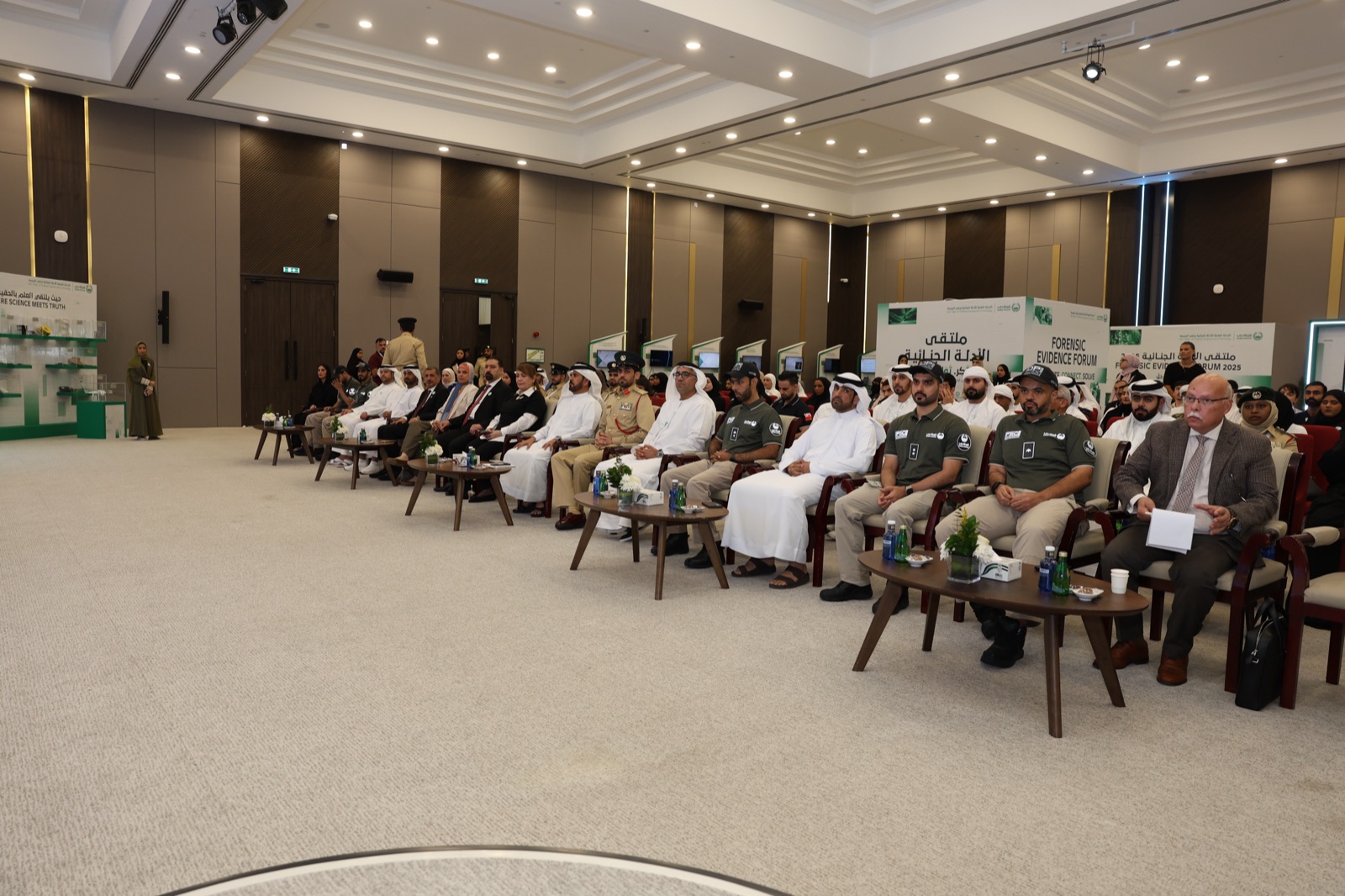
Previous editions
Three editions so far
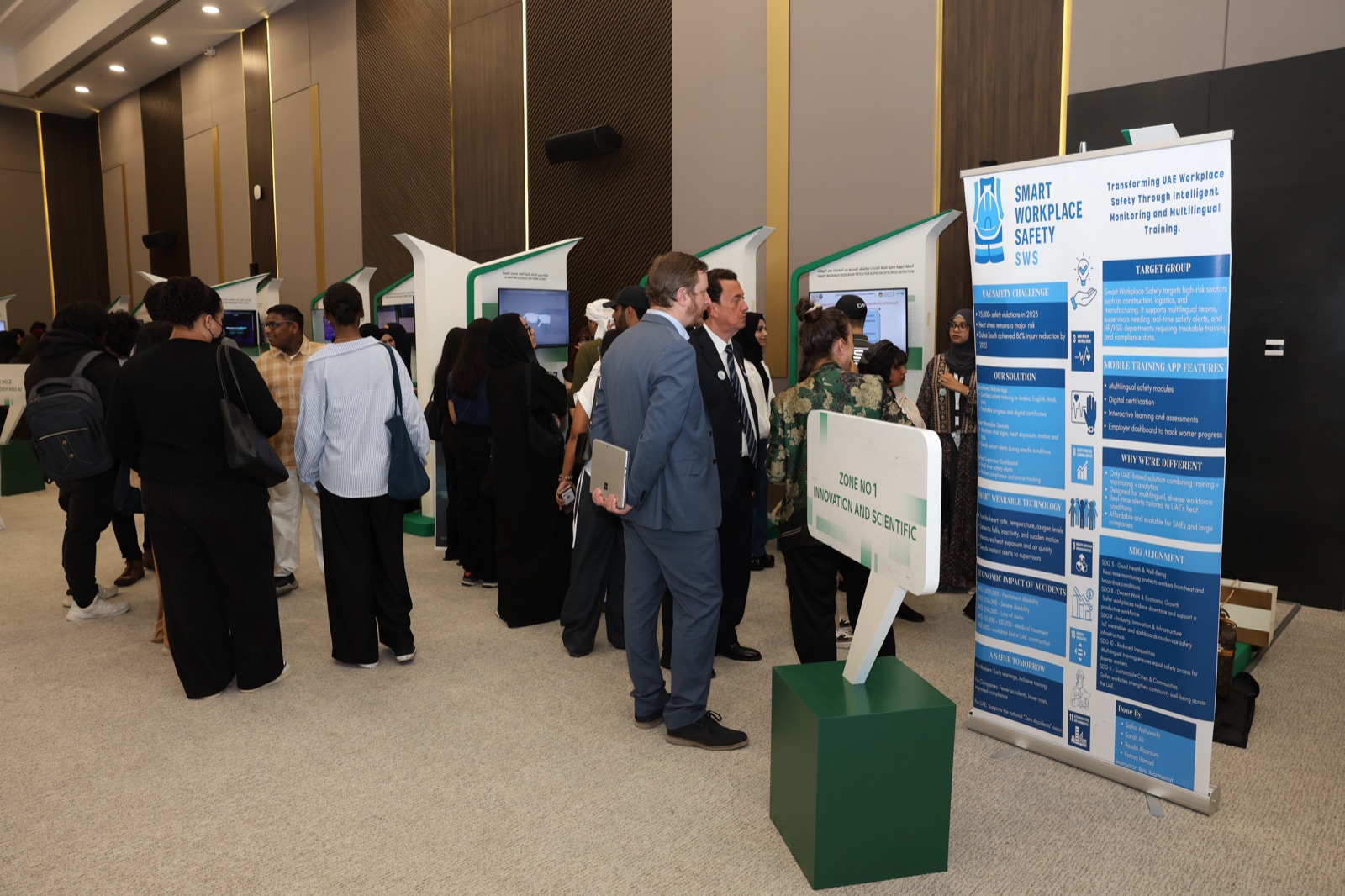
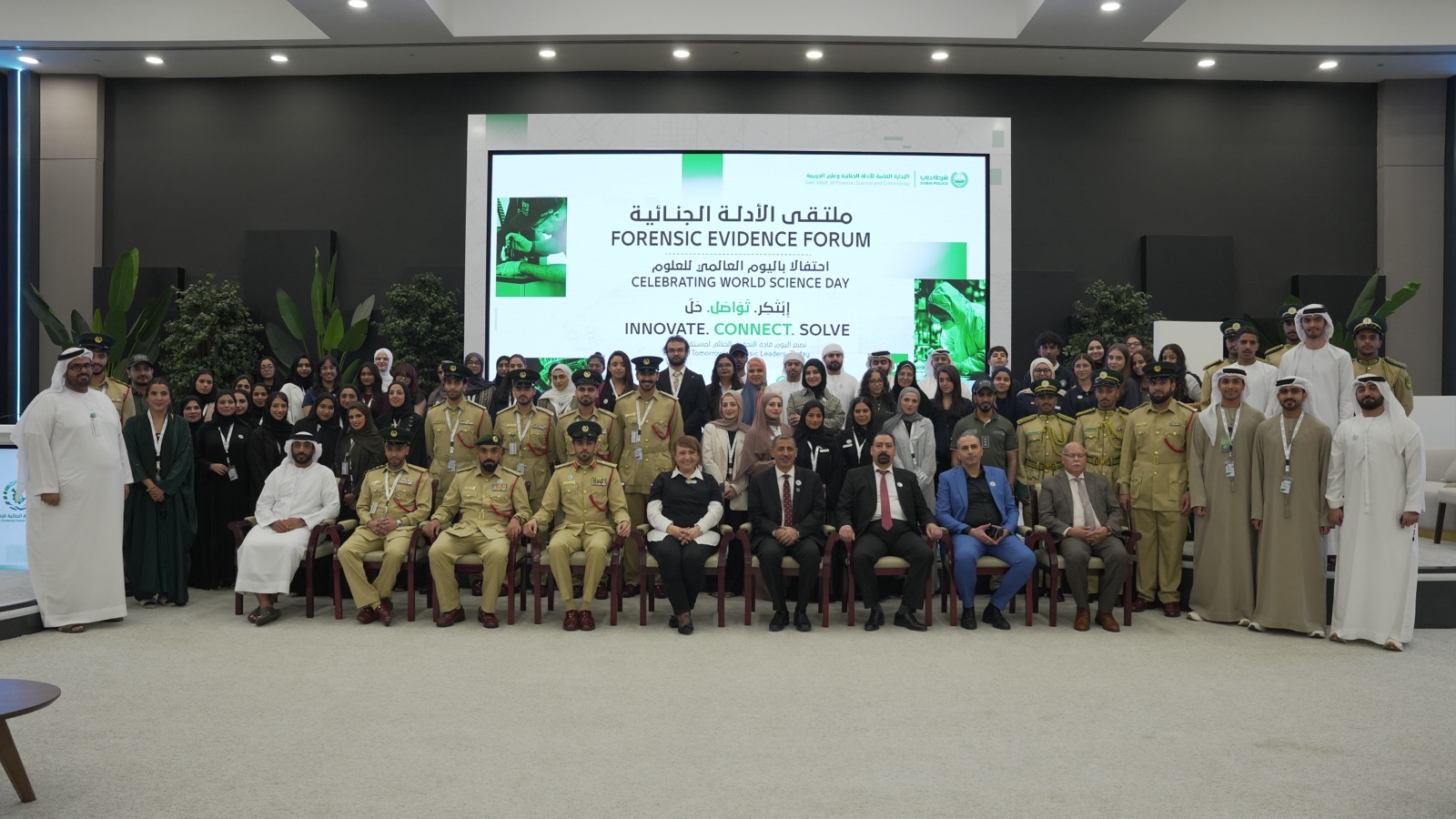
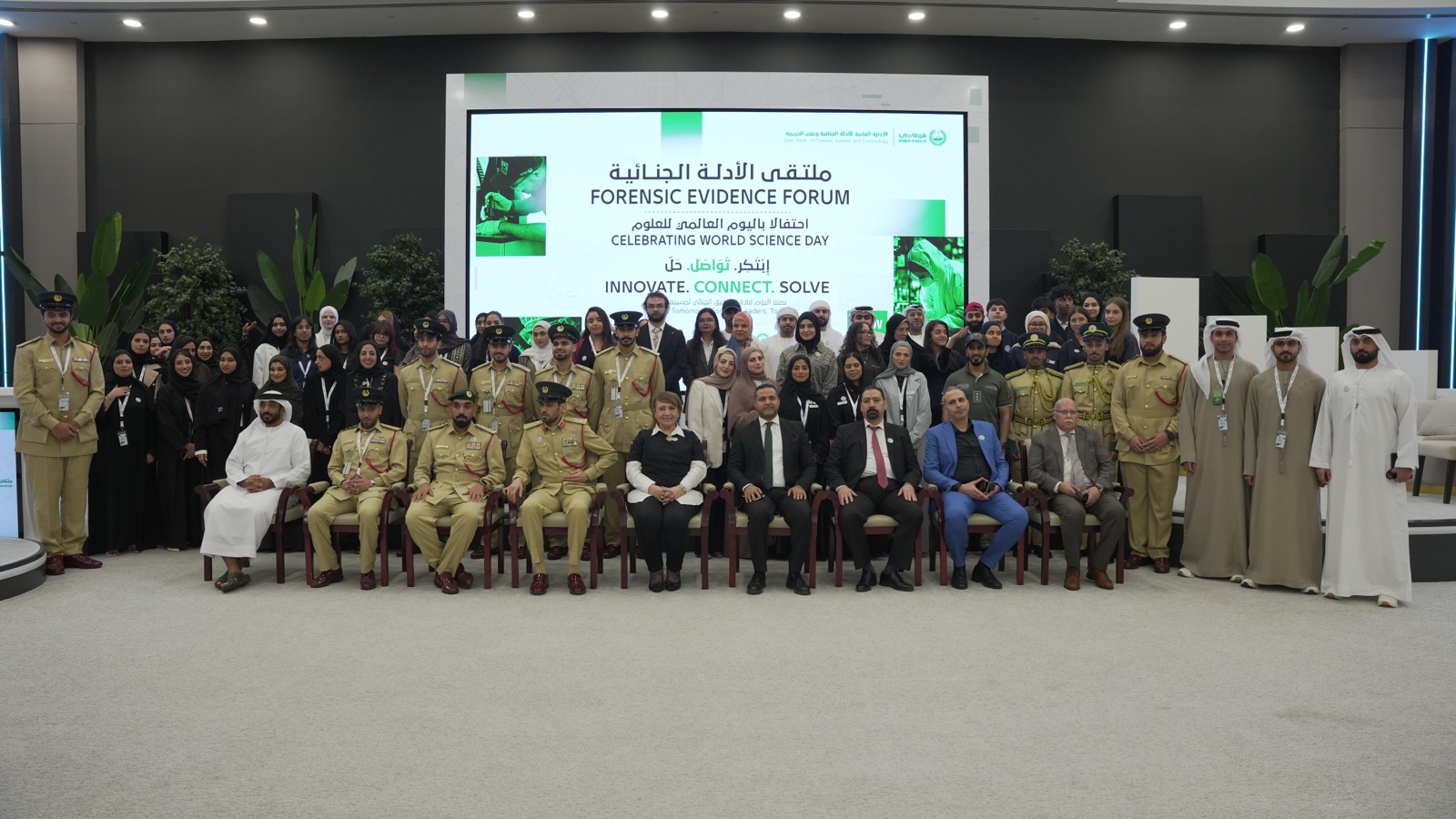
The Forensic Science Forum has run for three previous editions, bringing student project exhibitions, presentations and workshops together with forensic practitioners and law enforcement leaders.



Participating universities
Institutions that took part in previous editions.
 United Arab Emirates University
 University of Dubai
 Canadian University Dubai
 Amity University Dubai
 Ajman University
 American University of Sharjah
 University of Birmingham Dubai
 University of Wollongong in Dubai
 The University of Manchester Worldwide
 Middlesex University Dubai
 Dubai Institute of Design and Innovation
 Rochester Institute of Technology Dubai
 American University in Dubai
 Abu Dhabi University
 Higher Colleges of Technology
 Zayed University
 University of Sharjah